Chapter 8
How do days pass by so imperceptibly? Taken individually, they seem to crawl slowly, yet collectively, more than two months have already sunk into oblivion. Konstantin knew this state of awakening well. No sooner had he finished first grade than he found himself standing before the university office for the entrance examination. No sooner had he passed that examination than he was already reaching out his hand to receive his diploma.
"Good afternoon, Konstantin Augustinovich, may I come in?" asked a neatly combed young man with a folder in his hands, opening the door to the small office slightly.
"Yes, of course, who do we have here?" Kostya replied in a businesslike manner, sitting at his desk and closing the cash ledger.
"I'm here from Roshen company. We have an outstanding debt from the eighteenth, if you could take a look," the sales agent from Roshen sat down on the chair Kostya indicated. Kostya opened a large notebook with "Suppliers" written on its cover.
"Ah, yes, indeed there is," Kostya agreed after a minute of examining the notebook. He walked over to the safe, retrieved the required sum, and handed it to the agent. The agent wrote out a receipt and gave it to Konstantin.
"Thank you, all the best, goodbye," the agent said his farewell at the door.
"And may you not drop dead either," thought Kostya, then replied aloud, "Goodbye."
Our hero had been working as a manager of a small shop for over a month now. He had once come here with a referral from the employment office. That time they hadn't hired him, but he had left his contact information. Some time later they called and offered him a position as a salesman. Kostya had nothing to lose, so he agreed. Two weeks later, the shop was purchased by a young man. This man had money... but that was where his virtues ended. He understood nothing of reports, nor of running such an enterprise in general. Kostya began managing all the affairs in his stead. The Turkish firm where he had worked as an accountant dealt with production, but it took him only two weeks to switch from production to trade.
Konstantin's financial situation had stabilized. He could even afford to move out of his parents' home into his own apartment. But there was less and less time for philosophy. Kostya had nearly finished his second book before he started working. This book was meant to serve as a guide for independent study of philosophy. Now writing and philosophizing had become problematic. Work may not interfere with the contemplation of higher matters once it becomes habit and turns autonomously reflexive, but in the initial stages of forming such reflexes—this is impossible. Konstantin had to catch incomplete fragments of thoughts on the wing, grasping at them superficially and losing them forever if he hesitated for even a second.
Kostya looked at his wristwatch, which he had recently acquired. "Exactly two o'clock, time for lunch," he noted. Kostya had developed several habits. For instance, he absolutely had to drink coffee at home, arrive at work and drink another coffee. Lunch at two o'clock, followed by one cigarette. At exactly five o'clock, time to prepare to go home. And several others besides. In every person, especially those whose profession demands managerial control, one can observe these small anchor-habits. Working as a manager, even of a small shop, nonetheless required such control. Kostya clung to these habits and feared violating them, for subconsciously this would signify the situation slipping out of control. He had noticed more than once how breaking ingrained minor habits could throw him off balance for a good half of the day, or even the entire day.
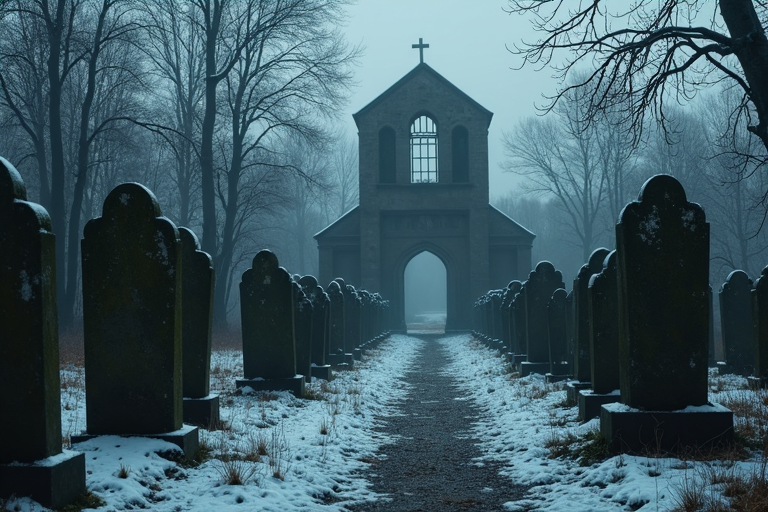
The habits were, as it were, part of the work; Kostya perceived them as obligations. At times a need was born within him to do something extraordinary, strange, perhaps foolish. Such as climbing onto the roof of some Gothic-style building, walking through a cemetery reciting Faust or Shakespeare. Smashing the window of his own shop and running off somewhere far away with a cry of "Freedom!"—but naturally, he never did any of this.
His relationship with Elizabeth remained at the level of acquaintances. She had acquired a boyfriend who worked as head of security at some large firm. This did not particularly interest Kostya. "Let him go to the four corners of the earth, even if he were the president himself," thought Kostya. Occasionally they might meet and talk about something, but these were not especially pleasant moments. Rather the opposite—it was like cutting wounds that had not yet healed. Though Kostya understood that this pain was better than nothing at all.
Konstantin came home from work a little later than usual. He hung his black spring jacket on the coat rack. He sat down by the window. Outside it was already growing dark. This evening had filled with a thick fog. Colors of dark hues drew Konstantin's consciousness into a vortex of pessimistic reflections, and he wrote:
"The day has come to an end; there was nothing special in it. I did not become happy, no accident befell me, no car struck me, no dog bit me, I was not angry, I was not particularly kind. I lived through it as always—with head bowed, continuing to dream of better times."