Chapter 27
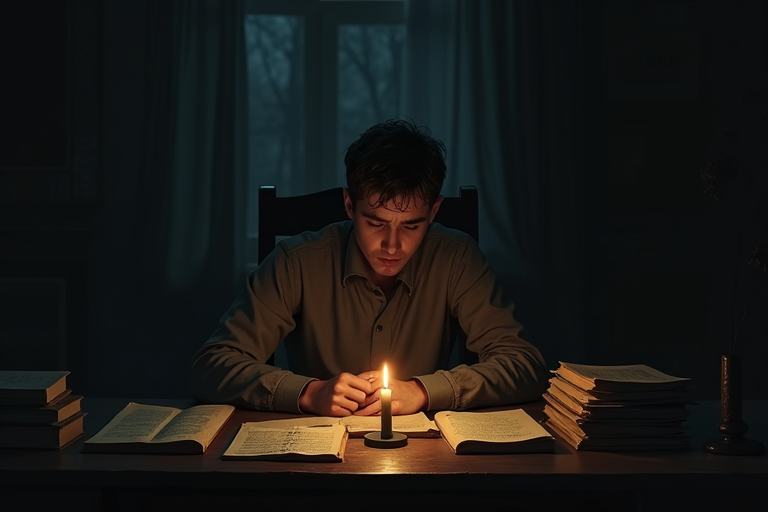
Konstantin pretended to listen to the weekly reports from the department heads.
"Are you even with us?" asked Katerina Rubleva, addressing the faintly smiling Konstantin. "Where have you been all week? I heard someone appeared in my field claiming to have found a cure for cancer."
"Yes, and we've got cold nuclear fusion over here," added Newton.
"I haven't heard about this 'genius' who created a cancer cure, Katya, but I think you shouldn't have any problems there. As for nuclear fusion—I have heard about that. What's the situation?" asked Kostya.
"They claim that fusion reactions can occur in chemical, atomic-molecular systems without significant heating of the working substance," replied Vitaly Chadaev. "To be honest, it looks quite convincing. They use palladium as a catalyst. The 'working body' contains hydrogen isotopes: tritium and deuterium. Newton doesn't quite believe them yet."
"And why should we believe them? Besides, one can find an alternative, non-nuclear explanation for this phenomenon, especially since there's been no information about neutron radiation. It could be, for example, a manifestation of the properties of palladium's crystal lattice," objected Maxim. "In short, we're still investigating."
"What about the excavations?" Konstantin asked the historian Andrei.
"They've been underway for about a week now, thanks to our funding," Andrei Avdoshin answered proudly.
"Have you found anything interesting?" asked Konstantin, though the answer to this question did not particularly concern Kostya. He had missed a good half of the conversation, responding only with "yes" or "no," while those present animatedly discussed the new topic of conversation. In truth, he was thinking about Elizabeth. This was the first day he had left her alone. "How could I have lived without her before?" he asked himself.
Once, returning home in the evening, he had seen a little boy with his grandfather. The grandfather handed the boy over to his mother. The mother and the boy walked about two meters away. The child turned around and said in his childish voice to the grandfather standing alone, "Grandpa, expect me tomorrow as a guest." To which the grandfather replied, "I will certainly be waiting."
Kostya did not know why this little scene had touched him. "It must be pleasant to know that someone loves you. Pleasant when there is a little being who loves you simply because you exist," thought Kostya. Now thoughts of children began to visit him more and more often. It would be the only thing that could make him even happier, though this already seemed impossible.
"I have a hypothesis on this subject. Konstantin, are you listening?" Maxim addressed Kostya.
"Leave him be, he's got an excess of serotonin right now," remarked Roma.
Kostya did not ask the psychologist how he knew this, assuming that his facial expression had most likely given him away.
"Yes, I'm listening," replied Kostya, knowing that some fantastical, unscientific supposition was about to follow. If Maxim Newton said he had a hypothesis, it meant some sort of nonsense; but if he said he had a theory, then it was truly a consistent, scientific truth. Did Maxim himself know about these verbal slips? Quite possibly not. Such things often happen with geniuses, but all is forgivable with them.
"Andrei says that some medallion they found has a strange influence on the expedition members. So here's the thing... I once pondered similar phenomena regarding objects. We all know the law of conservation of energy. Look, suppose a person makes a medallion, expending his energy on it; this energy, according to the law, doesn't disappear—it transfers into the medallion. Now suppose he gives this medallion freely to someone else. Along with the medallion, the energy expended on it is also transferred. The subject who received this medallion keeps it, bestows his attention upon it—that is, invests his energy into it again. In the end, if one thing has been passed down for thousands of years as an inheritance, it will possess the power or energy of all those who passed this thing from generation to generation," concluded Maxim Newton from his hypothesis.
Everyone pondered this for a moment. Then Nikolai Fedyushin snorted with a smile: "Honestly, Maxim, you're supposed to be a genius of physical sciences, and yet sometimes one hears such things from you."
"What do you mean? I have it all in formulas, I'll show you right now—" Maxim reached for the manuscripts in his bag.
"All right, all right, no need, we believe you," Anton Pavlish stopped him. "And what happens if this medallion isn't given as a gift but sold? Does it retain any energy then?"
"Ah... here it gets even more interesting," continued Maxim, despite the fact that some of those present sighed. "Money also contains energy that was expended in acquiring it. Essentially, when one person exchanges a medallion for another's money, they exchange energies, as a result of which each retains what is his own. Only when a thing is given freely does energy fully transfer from one person to another. The energy expended on making this thing, preserving it, or acquiring it with hard-earned money is transferred only freely. That's all," Newton concluded his tirade.
Then the members of the SSAP moved on to more important matters. Kostya also announced that it was time to translate their books into other languages and to seek partners for their mass distribution abroad. In connection with this, the question arose of the need to expand the budget of Valeria's department. Andrei, Nikolai, Seryozha, and Katya spoke about their upcoming events and conferences, and the meeting was concluded. This was the last full meeting of the SSAP.